






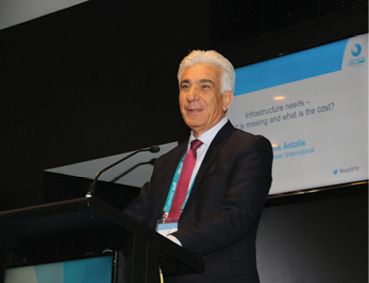
THE arrival of ever-larger cruise ships into Australasian waters is inevitable, with Royal Caribbean well advanced in planning for deployment of its Oasis-class vessels in Australia and NZ. According to RCCL’s Associate Vice President of Marine & Safety, Captain Nik Antalis (pictured left), “it’s only a matter of time,” as...
Subscribe to Continue
You've reached a subscriber-only article.
Subscribe free to Cruise Weekly for unlimited access to all articles, plus our regular newsletter and breaking news bulletins delivered to your inbox.
THE arrival of ever-larger cruise ships into Australasian waters is inevitable, with Royal Caribbean well advanced in planning for deployment of its Oasis-class vessels in Australia and NZ.
According to RCCL’s Associate Vice President of Marine & Safety, Captain Nik Antalis (pictured left), “it’s only a matter of time,” as he urged delegates at the Australian Cruise Association conference to take action to prepare for the arrival of the mega-vessels.
Oasis-class vessels are currently the largest cruise ships in operation, 360m in length with 5,400 lower berths.
But a number of other cruise lines, including MSC and Dream Cruises, also have their own behemoths of the sea coming.
Antalis noted that the only Australian port which will be able to handle the large vessels is the new Brisbane International Cruise Terminal (see page 3), in contrast to a host of ports in New Zealand which were already heeding calls from the cruise sector to improve their infrastructure.
Antalis also contrasted the Australian paucity of Oasis-capable ports with the attitude in Asia, where there will next year be a total of 40 destinations able to handle the world’s largest cruise ships – an increase of 35 in just the last five years.
He said ports that would be suitable in Australasia with relatively little investment would include Hobart, Darwin and Fremantle, but Sydney and Auckland remain problematic.
MEANWHILE Silversea Cruises MD Adam Armstrong (pictured right) also highlighted the key opportunity afforded by the huge expansion of the global cruise fleet over the next decade.
Armstrong said if Australia and New Zealand wish to continue to capitalise on the global boom in cruising – and the associated economic and employment benefits – it is vital that capacity be available for bigger ships.
Currently there are 138 confirmed new ships on order for delivery by 2027, comprising a whopping 285,000 total beds.
And while expedition cruising is booming, the relatively small size of ships in the burgeoning expedition fleet means it’s the “next big little thing,” he added.
“It’s very exciting, it’s very sexy but they’re only 3% of the capacity that’s coming online.
“The vast majority of the new ships are big, large, contemporary premium ships and that’s got to be the focus of growth for the Australasian market, to attract those ships,” Armstrong said.
He also highlighted the expense of operating in local waters.
“I want to make it clear that the industry will pay its way, we’re not trying to avoid costs and we’re certainly not trying to avoid paying for upgrades to ports in particular,” he said.
But “high costs drive cruise prices up and ultimately if they get too high they drive ships out,” Armstrong added, giving the example of a host of new taxes and charges imposed on the industry in New Zealand in just the last two years.

Subscribe for Free Access
Get full access to this article and all premium content. FREE forever.