ROYAL Caribbean Group has released its 2020 Seastainability report, which documents the company has met or exceeded nearly all of its sustainability targets from last year. The company set the objectives in 2016 in partnership with World Wildlife Fund for Nature, and as of this year, it has met or...
ROYAL Caribbean Group has released its 2020 Seastainability report, which documents the company has met or exceeded nearly all of its sustainability targets from last year.
The company set the objectives in 2016 in partnership with World Wildlife Fund for Nature, and as of this year, it has met or exceeded all of its 2020 goals, with the exception of the sustainable seafood sourcing target, which was impacted by global suspension of service from the COVID-19 pandemic.
The report, in its 13th year, reveals three-quarters of farmed seafood served on Royal Caribbean Group ships now comes from certified sustainable sources, which is a first for the cruise industry.
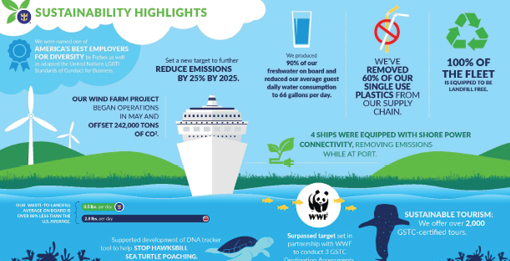
Other highlights include Royal Caribbean achieving its carbon reduction target of 35%, and committing to further reduce emissions by a quarter by 2025.
Royal Caribbean’s wind farm project in Kansas, developed in partnership with Southern Power, began operations last year, and generated approximately 242,000 tons of carbon offsets.
It is expected the wind farm will offset up to 12% of the company’s global emissions each year.
Almost all (90%) of Royal Caribbean’s fresh water is produced on board its ships, in order to not deplete local resources, and it has currently removed 60% of single-use plastics from its supply chain.
Royal Caribbean is now working to develop a new set of targets.