


ORLANDO Ashford is the President of Holland America Line.
The coronavirus (COVID-19) has run rampant, catching all of us off guard. During a time when we’re afraid to go out, fearful of others as possible COVID-19 carriers, how do we ensure we continue acting in ways consistent with our common human dignity?
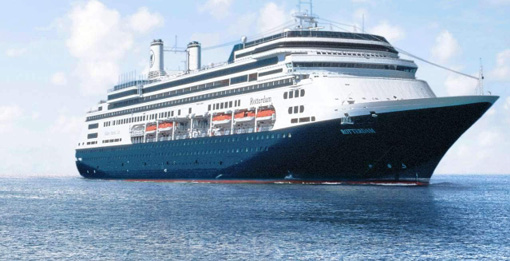
Holland America Line is working tirelessly to find medical help and safe passage home for the 1,243 guests and 1,247 crew stranded at sea on our two ships, Zaandam and Rotterdam.
They are among the 9,000-plus passengers still remaining on about a dozen other cruise ships worldwide. These are unfortunate souls unwittingly caught up in the fast-changing health, policy and border restrictions that have rapidly swept the globe.
The questions I keep asking are:
* How will those needing intensive medical treatment receive it with limited shipboard medical staff, facilities & supplies?
* Nations are reluctant to share provisions or afraid to carry critical supplies out to us. What happens when we run out?
* Can guests and crew without symptoms get home with limited flights and closed borders?
Nations are justifiably focused on the COVID-19 crisis. But they’ve turned their backs on thousands of people left floating at sea. Are these reactions based on facts from experts, or fuelled by irrational fear? What happened to compassion and help thy neighbor?
Forced to Fend for Ourselves
We are dealing with a “not my problem” syndrome. The international community, consistently generous and helpful in the face of human suffering, shut itself off to Zaandam leaving her to fend for herself.
As a result, Zaandam was forced to take proactive measures, rendezvousing with sister ship Rotterdam to replenish supplies and protect the health of the guests and crew who aren’t ill.
We made the unprecedented decision to transfer to Rotterdam those guests we could quickly and safely move to alleviate Zaandam crew workload, and to get as many guests as possible into rooms with verandahs.
Following CDC protocols, we screened guests prior to transfer. We did not move guests likely to need ongoing support by the medical team to Rotterdam. Guests on both ships continue to self-isolate in their staterooms.
Reducing the guest count on Zaandam helps available staff better serve those remaining on board. No guests who have been ill or symptomatic were moved, nor were their close contacts. And no Zaandam crew moved to Rotterdam.
How We Got Here
It’s important to remember passengers and crew did nothing wrong. When voyages began in early March, South and North America had few confirmed COVID-19 cases.
The World Health Organization (WHO) was advising against travel restrictions, and the Americas weren’t affected by travel or health advisories. Travel in all forms continued — albeit with more hygiene reminders.
Within a matter of days, that all changed. Local governments swiftly closed ports globally.
Ships previously cleared for docking were abruptly turned away. Officials denied repeated requests for access and assistance and the world shut itself off, leaving ships stranded at sea to make it on their own, which isn’t sustainable. Eventually someone must allow these ships in.
Holland America Line began actively monitoring COVID-19 in early 2020, working to step up already-robust procedures to keep guests & crew safe.
Then on March 13, amid growing global health concerns, we announced a 30-day suspension of global cruise operations. On March 30 that was extended an additional 30 days, cancelling cruises until May 14.
For ships like Zaandam mid-cruise — its two-week South America voyage began March 7 — we quickly sought approval to disembark guests for flights home. Chile announced the closure of their borders on March 16, literally while Zaandam had been sitting in Punta Arenas for two days awaiting clearance for guests to disembark. Peru closed, as did Argentina, then the rest of South America. Repeated requests for humanitarian consideration were denied.
Then March 22 — one day after the voyage’s original end date — a few guests and crew began reporting influenza-like symptoms. Despite countless desperate pleas in the following days, we were forbidden to medevac critically ill patients.
Already four guests have passed away and I fear other lives are at risk. As of March 30, 76 guests and 117 crew on Zaandam have influenza-like illness, including eight people who have tested positive for COVID-19. We have seen a notable and steady decline in cases over the last 48 hours, showing the actions we took have helped contain spread.
However, there are also 1,167 healthy guests and 1,130 healthy crew across these two ships.
Thankfully, the Panamanian government graciously granted humanitarian approval allowing us to move through the Panama Canal, which we did the evening of March 29. Even with this progress, we are still facing a multi-day journey before we can safely dock and disembark.
And we need confirmation from a port that is willing to extend the same compassion and grace that Panama did, and allow us to come in so our guests can go straight to the airport for flights home. It’s tempting to speculate about the illnesses that may have been avoided or lives saved if we’d gotten the assistance we sought weeks ago.
A Test of Our Humanity
It’s easy to condemn those who are unhelpful and unwelcoming during times of need. But what if instead we focus on the type of society we strive to be, where nations share a collective responsibility to help others in peril? Because these travellers could have been any one of us or our families — caught up by a fast-changing scenario nobody foresaw.
The COVID-19 situation is one of the most urgent tests of our common humanity. To slam the door in the face of these people betrays our deepest values. Given the opportunity, I am hopeful that all of us will follow the lead of our Panamanian friends and help our neighbours.